
Dražen Oreščanin on Cycling, Leadership & Mental Resilience
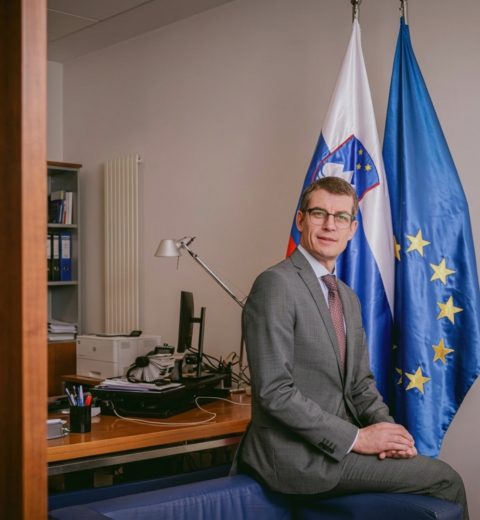
Dražen Oreščanin is best known as the co-founder and long-time leader of Poslovna inteligencija (now Solvership), but beyond business leadership, cycling has shaped his life for decades. From racing across Europe and serving as an international cycling commissaire to completing Ironman, the bicycle has been his constant: a source of mental resilience, clarity, and balance during intense periods of entrepreneurship and crisis management.
You are best known to the public as the co-founder and director of Poslovna inteligencija (today Solvership). How much time and stress did more than 20 years as the responsible person at the head of an IT company require?
We launched Poslovna inteligencija at the end of 2001. At the time, we were all still very young and wanted to create something different and I believe we succeeded. Over the years, many things changed: from the early days when there were only two of us, through a period of intense growth until 2008, then several years of the global financial crisis, which we successfully survived, and finally stable growth and development from 2012 until today.
During the first 6–7 years leading up to the crisis, we worked extremely intensively, and in that period we were physically and emotionally exhausted. During the crisis, business activity slowed down significantly, and I managed to find some balance. Alongside work and family life, I returned to sports. For the past fifteen years, I have managed to balance business and personal obligations quite successfully, and I generally work normal working hours.
We’ve seen that you are very active in sports, winning medals in various competitions. Where does your love for cycling come from, and how did the bicycle fit into your busy schedule?
My parents were not particularly supportive of sports when I was young, it was a different time. I always loved cycling, but I started taking it more seriously at the age of 19, when I enrolled at FER (University of Zagreb Faculty of Electrical Engineering and Computing) and joined the cycling section of KSET.
A few years later, I began training with cyclists from Zagreb cycling clubs and competing in races across Croatia, Slovenia, Italy, Austria, and Hungary. For a period, I even worked as General Secretary of the Croatian Cycling Federation. In 1998, I stopped competing actively and passed the exam to become an international cycling commissaire.
Cycling was an important part of my life long before the idea of Poslovna inteligencija even existed, so it’s natural that it still plays an important role in my lifestyle and schedule today.

What does cycling personally mean to you? Is it an escape, recreation, inspiration or a lifestyle?
I would say everything except escape… I’m not really the type who runs away from things 😊
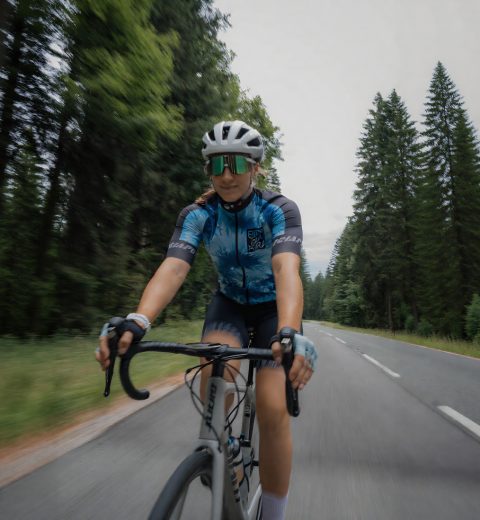
In my younger days, cycling was definitely a lifestyle — training, wrenching on bikes, racing, hanging out with the team. Today it’s mostly recreation and socializing, whether I ride alone or with friends. We often go together with our families to recreational Gran Fondo races, using the opportunity for both sport and enjoying beautiful destinations and good food.
Whenever I travel, I try to plan a bike ride as well. Over the past fifteen years, I’ve raced (or simply ridden) in the Dolomites, Tuscany, the Alps, Portugal, Spain, the USA, Saudi Arabia, and many other places. Over the last decade, I’ve also been involved in triathlon, and last year I completed the Ironman in Barcelona.
Additionally, as a commissaire, I have officiated races in over 25 countries, some at the highest level including World Cups and World Championships.
How much has cycling helped you maintain mental health and deal with stressful situations throughout years of working in a demanding business environment?
During some of the most intense periods of growth and development at Poslovna inteligencija, cycling was always an opportunity for introspection and self-reflection, thinking through events that had happened or were yet to happen. It was a way to step away from daily routine and preserve mental stability.
Of course, physical activity also helps reduce stress. My personal impression is that cycling was a release valve without which I would have found it much harder to overcome many crisis situations.

As someone who has long been active in advocating digital and social change — do you see cycling as a tool for urban transformation?
The bicycle as a means of transport has transformed many European urban environments that approached it strategically. Unfortunately, in Zagreb this transformation is being approached in the wrong way.
Instead of systematic investment in traffic infrastructure suitable for cycling, some changes are being introduced rather aggressively without proper infrastructure foundations, causing resistance and dissatisfaction among some citizens. I hope that in the future, a higher-quality and more strategic approach will be chosen.

Do you have a favorite route or destination that you would recommend to our Bikademy Students?
There are many routes I enjoy, but I would recommend three that are each beautiful in their own way.
In Zagreb, I really enjoy the route from Sesvete along the Sava River toward Sisak through Oborovo. If you ride to Sisak and back, it’s a flat 120 km route, though it can be shorter if you turn around earlier. The road surface is solid, traffic is almost nonexistent, the scenery along the Sava is beautiful, and there are no climbs.
On the island of Pag, we often ride the route from Novalja to Lun and back, which we affectionately call “El Clasico.” The route is about 40 km long, has an undulating profile with a few short steep climbs and a 550-meter elevation gain. The route passes through the Lun Olive Gardens, a protected botanical reserve.
Probably the most beautiful route in our region is the road from Kotor to Lovćen in Montenegro. It climbs from the Bay of Kotor up to 1,750 meters above sea level. From Lovćen, there is a breathtaking view of the entire bay, and of course, the Njegoš Mausoleum is located there, built by the famous Ivan Meštrović, definitely worth visiting when you’re there.