Marina Matijević: Small Changes, Better Living
Marina Matijević is the creator of I, a Better Citizen (Ja Bolji Građanin), an initiative dedicated to making sustainability easier to understand and apply in everyday life. Through practical advice, education and her Green Talks podcast, she encourages people to make small but meaningful changes in the way they consume, move and live. In this Bikademy interview, Marina talks about sustainable habits, everyday cycling, what Croatian cities need to become more bike-friendly, and why exploring destinations on two wheels can give us a completely different perspective.
By launching the I, a Better Citizen initiative, you started learning how to live more sustainably while also sharing what you learned with others. What was the key moment when sustainability grew from a personal interest into your public mission?
There was no dramatic, movie-like turning point. It all started from my own frustration. I would stand in front of a recycling bin and realize that, despite all the labels and regulations, I still had no idea where certain things were supposed to go.
So I started researching, reading and asking questions to municipal services and experts.
The key moment came when I realized that most people do not refuse to live more sustainably because they do not care, but because the information is too complicated, sometimes contradictory and completely unsuited to the way people communicate today.
I decided to simplify it and offer solutions in plain language, based on one simple idea: if I can understand it and apply it in my own home, then anyone can.
On your platforms, you turn complex environmental topics into simple and practical advice. How do you choose your topics and verify information before sharing it with your audience?
I choose topics entirely from real life: from what people ask me in DMs or from things I encounter myself in a shop, in the kitchen or on the street. If something is unclear to me, chances are it is unclear to others as well.
When it comes to checking information, there are no shortcuts or improvisation, although of course mistakes can happen from time to time because ecology and sustainability are constantly evolving fields in which we are all continually learning.
When I research a topic, I go through official laws and regulations, but most importantly, I contact people working directly in the field. That has included calls to public authorities, professors and scientists, but also plumbers, air-conditioning installers, manufacturers and distributors of specific products.
I also ask my followers a lot of questions because the community includes people from many different niche professions, and their practical experience is invaluable to me.
When we talk about sustainability, we usually first think about waste, recycling or energy consumption. Do you think the way we move around every day is still too often overlooked as an important part of sustainable living?
Absolutely. We are used to looking at sustainability through recycling bins or switching off lights at home, while forgetting that transport is actually the single largest consumer of energy.
According to Eurostat, transport accounts for around 32% of total energy consumption in the EU, with more than 73% of that coming from road transport, where private cars are by far the biggest contributor. That is an enormous amount of energy that we rarely think about because driving has become automatic behaviour.
And then we end up with a 1.5-tonne car carrying one person to a pharmacy 800 metres away. That is simply an enormous waste of resources.
Sustainable mobility is not only about CO2 emissions and fuel. It is also about quality of life in cities: less noise, less pollution, less stress and more space for people.
The moment we change the way we move, we change the micro-system of our entire everyday life.
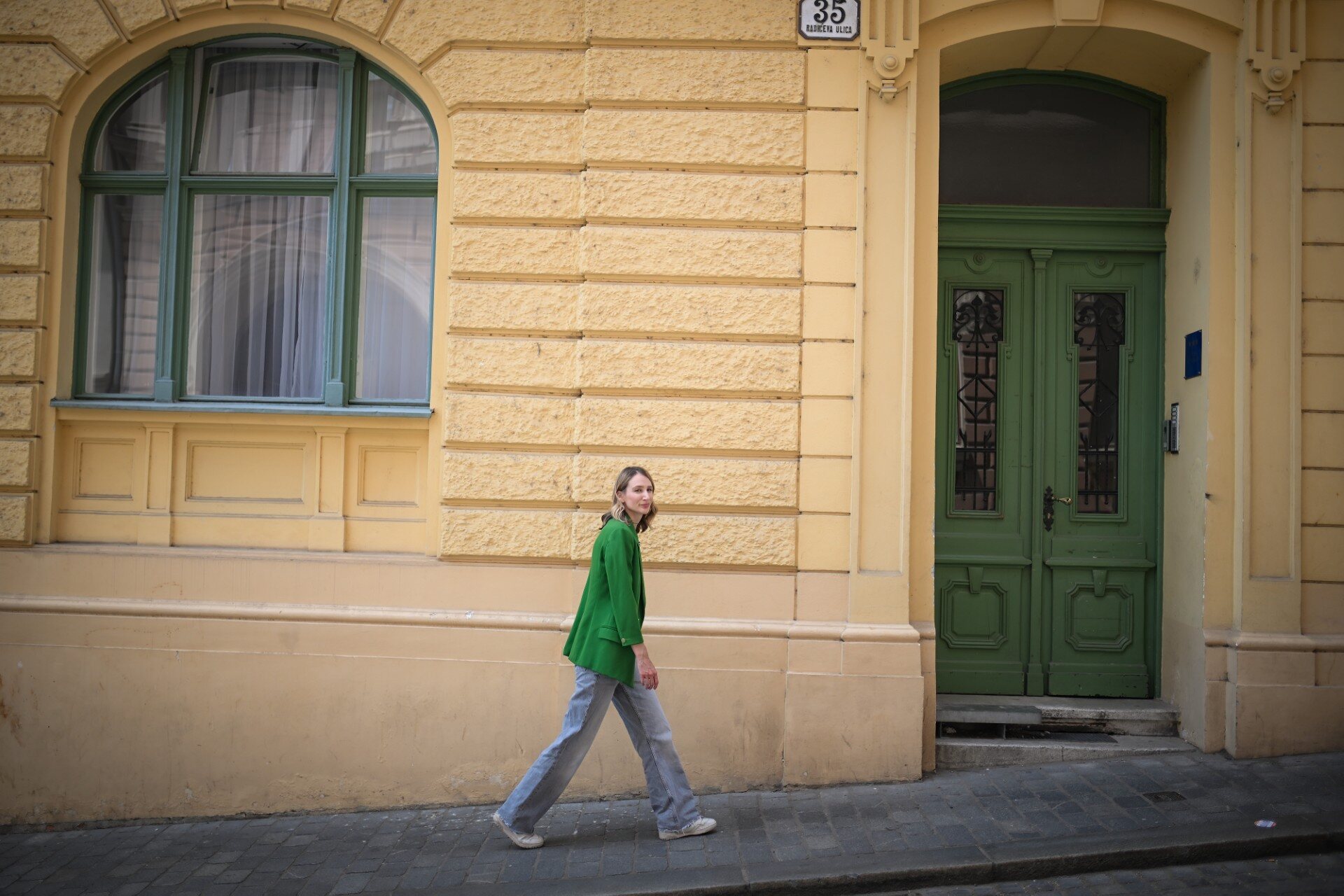
You are known for using your car very rarely and often getting around the city on foot or by bicycle. When did cycling become part of your everyday life, and what does this way of moving give you?
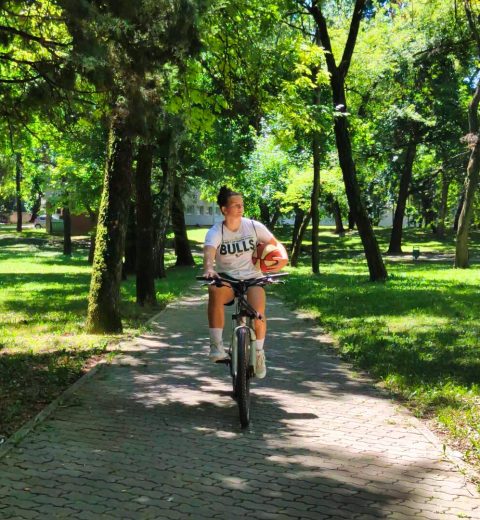
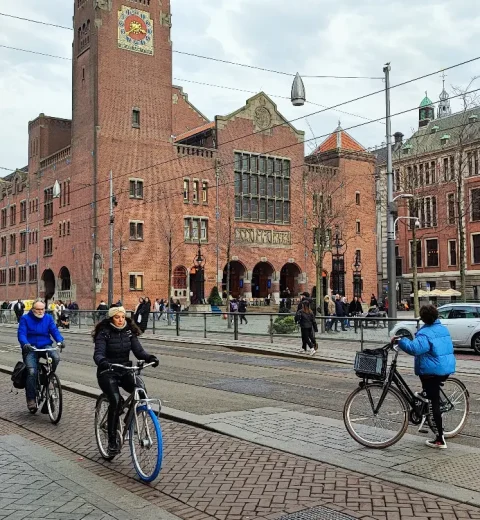
The bicycle is my main means of transport around the city.
It gives me an incredible sense of freedom and predictability. There is no looking for parking, no sitting in traffic jams at 4 p.m., and I know almost exactly how long it will take me to get anywhere in the city.
Cycling also reconnects you with the city.
You are not sitting inside a metal box. You see your neighbours, feel the changing seasons and release stress before you even arrive at your destination.
In your opinion, what needs to change in Croatian cities for more people to choose the bicycle for going to work, shopping or meeting someone for coffee without fear or hesitation?
Honestly, cycling to work is simply not yet deeply rooted in our culture, and we literally have a million excuses: “My hair will get ruined.” “I’ll get sweaty.” “What if it rains?” “I have things to carry…”…
We are generally used to the comfort of the car, even for distances that would actually be easier to cover on foot.
Of course, the other part of the story is safety. People are afraid because in many places a cycle path can still suddenly end in the middle of an intersection or be blocked by a parked car.
But I have to say that things are clearly improving. There are visible changes both in Zagreb and across the rest of Croatia, with more investment in cycling infrastructure, better connections between routes and a gradually expanding network.
Once the infrastructure reaches the point where both a child and a retired person can feel completely safe, the excuses start disappearing on their own. The bicycle then naturally becomes the first choice rather than an alternative.
Travel is another area where our everyday choices can reduce our impact on the environment. How much can cycling change the way we discover a destination and allow us to experience it more slowly, personally and sustainably?
I have a young child, so I am currently not at a stage of life where I can fully identify with multi-day cycle touring or actively pursue it myself. But I know cycle tourists for whom it has become their absolute favourite way to travel.
Cycling completely changes the travel experience.
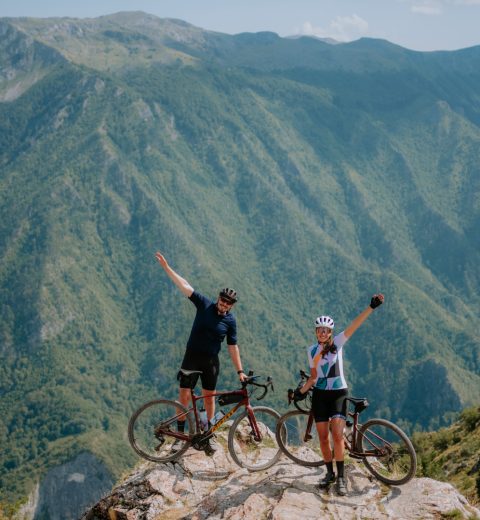
From a car or bus, you usually only see the journey from point A to point B. On a bicycle, you experience everything in between. You turn into a side street, feel the surroundings, stop wherever you want and talk to people you would otherwise never have met.
That is what “slow mobility” is about not rushing through a destination simply to tick it off a list, but actually experiencing it in a more personal way and without leaving a carbon footprint behind.
Is there a city, region or destination that you particularly enjoyed exploring by bicycle, or one that you would recommend to Bikademy Students for this kind of experience?
I am not yet among those cyclists who collect serious kilometres on the road because I mostly use my bicycle around the city and for everyday errands. Although, when you add all those rides together day after day, the distance becomes quite significant!
My longest intentionally planned leisure ride so far has been to Samobor.
I can say that Slavonia and Baranja really appeal to me… and I admit, one of the key arguments is that they are flat, so there is no fear of unexpected climbs! Joking aside, it is a beautiful region with fantastic nature, welcoming people and roads that simply invite you to enjoy an easy ride from village to village.
Osijek, for example, is a great example because it has excellent, well-maintained and cyclist-friendly infrastructure, which makes exploring the city much easier and more enjoyable.
For Bikademy Students who want to combine enjoyment with something useful, it is a perfect starting point.
And for those with a little more fitness or an adventurous spirit, I believe exploring the Adriatic islands by bicycle outside the peak tourist season can offer a completely different and much more authentic Mediterranean experience.
Finally, what would you say to someone who wants to live more sustainably but does not know where to start and believes their small contribution cannot make a real difference?
Forget about perfection. You do not have to eliminate all plastic overnight, become vegan and sell your car. Start with one simple habit: bring your own bag to the shop, turn off the tap while brushing your teeth, or once a week choose to walk or cycle instead of driving.
One person’s small contribution may seem insignificant when viewed in isolation, but when a million people make just one small change every day, that becomes a massive systemic shift.
We do not need one person living 100% sustainably. We need millions of people doing it imperfectly, but consistently, every single day. Start with whatever feels easiest for you today.